/seekergeneral/
Nexus of Esoteric Resources



/sg/ Recommended Reading
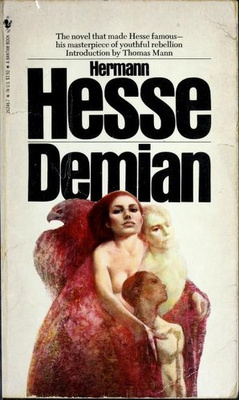
Demian by Herman Hesse
“Hermann Hesse's novel "Demian," published in 1919, introduces the protagonist Max Demian as a guiding angel who assists Emil Sinclair in facing his spiritual conflict. Influenced by Carl Jung and Nietzsche, the novel delves into Sinclair's struggle between light and darkness, echoing Hesse's own psychological turmoil during World War I. This work, initially published under a pseudonym, intertwines themes of individualism and a new spiritual era emerging from the aftermath of the war.”
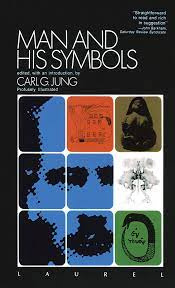
Man and His Symbols by Carl Jung
“The last work undertaken by Carl Jung before his death in 1961. First published in 1964, it is divided into five parts, four of which were written by associates of Jung: Marie-Louise von Franz, Joseph L. Henderson, Aniela Jaffé, and Jolande Jacobi. The book, which contains numerous illustrations, seeks to provide a clear explanation of Jung's complex theories for a wide non-specialist readership.”
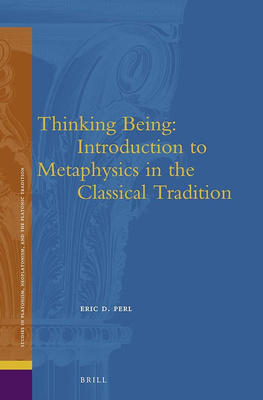
Thinking Being by Eric Perl
“In Thinking Being, Eric Perl articulates central ideas and arguments regarding the nature of reality in Parmenides, Plato, Aristotle, Plotinus, and Aquinas. He shows that, throughout this tradition, these ideas proceed from and return to the indissoluble togetherness of thought and being, first clearly expressed by Parmenides.” Introduction to metaphysics.
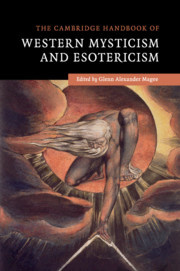
The Cambridge Handbook of Western Mysticism and Esotericism by Glenn Alexander Magee
“Including contributions by leading scholars, this volume features essays on such topics as alchemy, astrology, magic, Neoplatonism, Kabbalism, Renaissance Hermetism, Freemasonry, Rosicrucianism, numerology, Christian theosophy, spiritualism, and much more.”
The Crisis of the Modern World by René Guénon
“In the present work Guénon ruthlessly exposes the ‘Western deviation’: its loss of tradition, its exaltation of action over knowledge, its rampant individualism and general social chaos. His response to these conditions was not ‘activist’, however, but purely intellectual, envisioning the coming together of Western intellectual leaders capable under favorable circumstances of returning the West to its traditional roots.”
The Perennial Philosophy by Aldous Huxley
“The Perennial Philosophy is an attempt to present this Highest Common Factor of all theologies by assembling passages from the writings of those saints and prophets who have approached a direct spiritual knowledge of the Divine...”
“Mr. Huxley quotes from the Chinese Taoist philosophers, from followers of Buddha and Mohammed, from the Brahmin scriptures and from Christian mystics ranging from St John of the Cross to William Law, giving preference to those whose writings, often illuminated by genius, are unfamiliar to the modern reader.”
Mere Christianity by C.S. Lewis
“Mere Christianity is a Christian apologetical book by the British author C. S. Lewis. The book consists of four parts: the first presents Lewis's arguments for the existence of God; the second contains his defence of Christian theology, including his notable "Liar, lunatic, or Lord" trilemma; the third has him exploring Christian ethics, among which are cardinal and theological virtues; in the final, he writes on the Christian conception of God.”


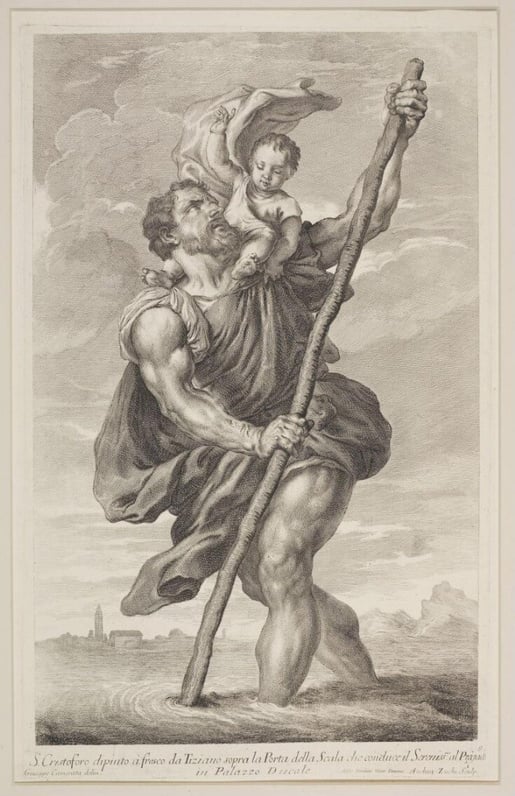
“…it is a relatively rare occurrence, which is experienced only by those who have gone through the wearisome but, if the unconscious is to be integrated, indispensable business of coming to terms with the unconscious components of the personality…Developments of this kind should, therefore, be watched very carefully; they require the closest control. I would recommend anyone who feels himself threatened by such tendencies to hang a picture of St. Christopher on the wall and to meditate upon it.?”
Carl jung [On the Nature of the Psyche, CW 8, par. 430.]
Jung's concept of individuation refers to the lifelong psychological process through which an individual develops a coherent and integrated sense of self. Individuation involves the integration of unconscious contents, including archetypes and Shadow aspects, into conscious awareness, leading to the emergence of a more authentic and holistic personality. The goal of individuation is the realization of the self — a transcendent and unifying principle that represents the totality of the psyche and the ultimate potential of the individual.
Speak to yourself with compassion
Pay attention to your triggers
Take note of thought patterns and habits that repeat themselves
No stones left unturned